Cyberdeck
During the Spring of 2026 a movement appeared online of young women building cyberdecks, hand built personal computing devices, and especially constructing them in playful feminine ways from makeup cases, toys, bags etc. It was connected to the ongoing movement to reclaim tech and media from giant cloud corporations. Watching these videos was incredible and inspiring and the fact that it was other women at the center of this movement was enough to get me to finally go ahead and build a cyberdeck of my own.
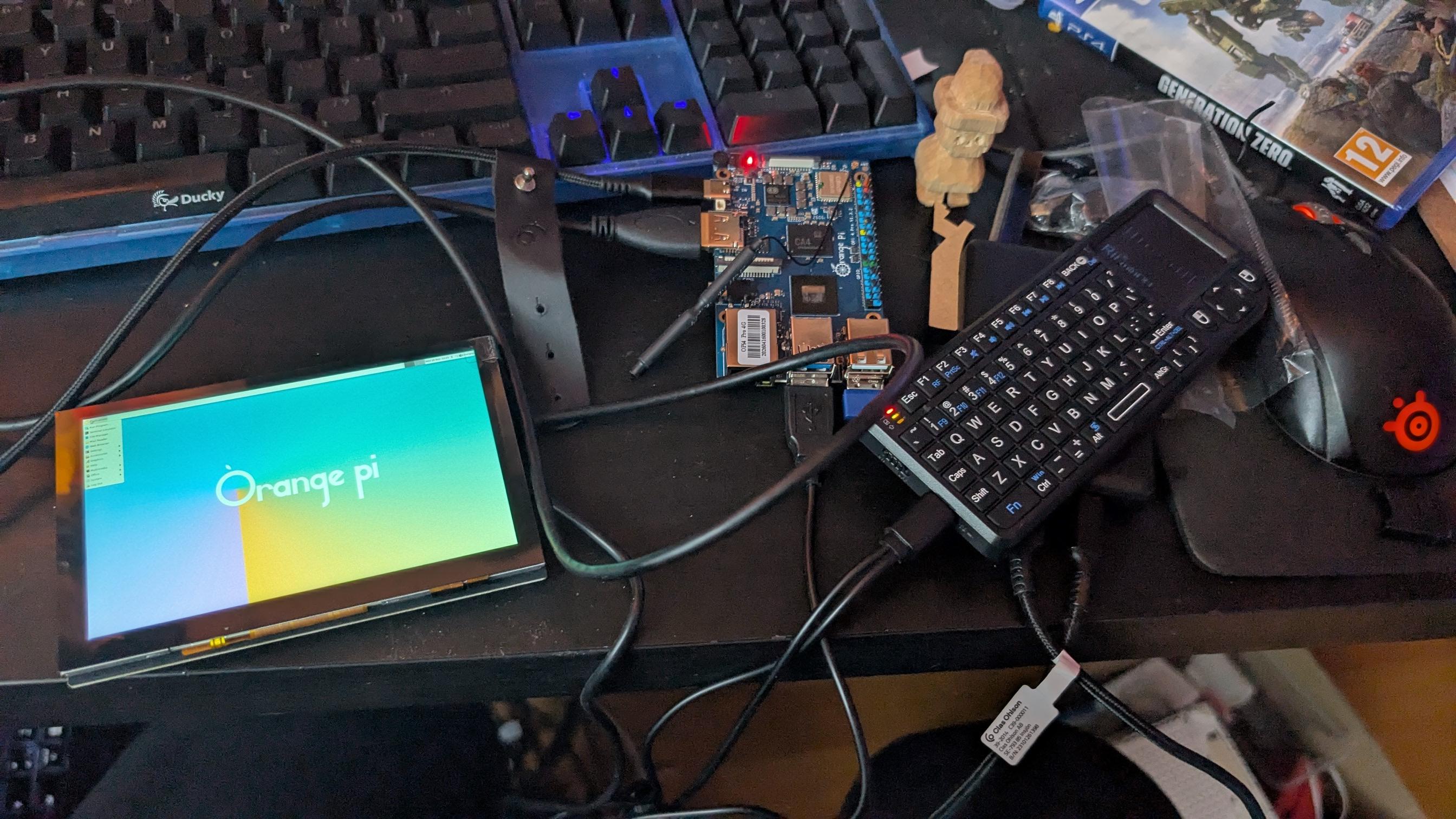
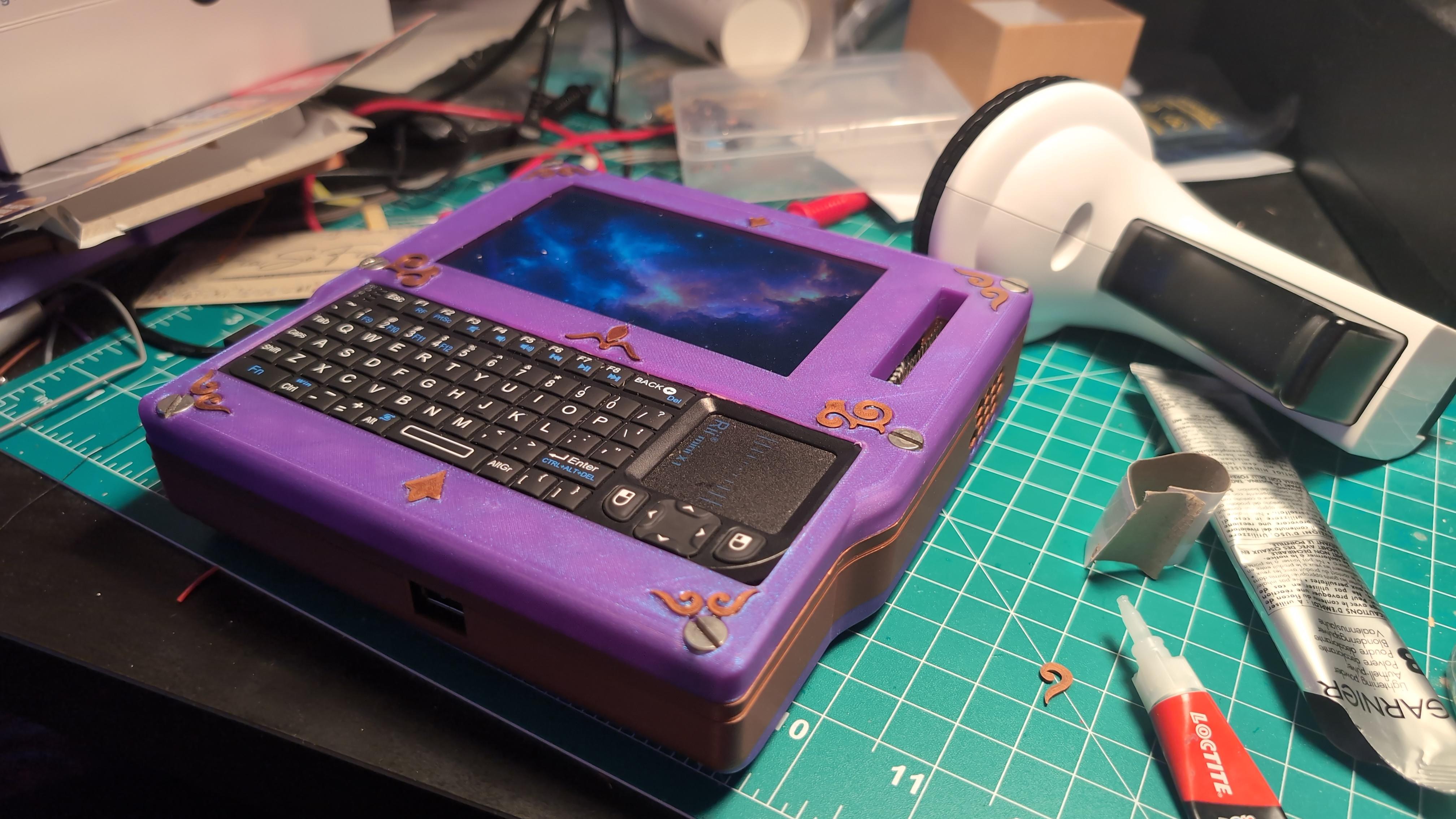
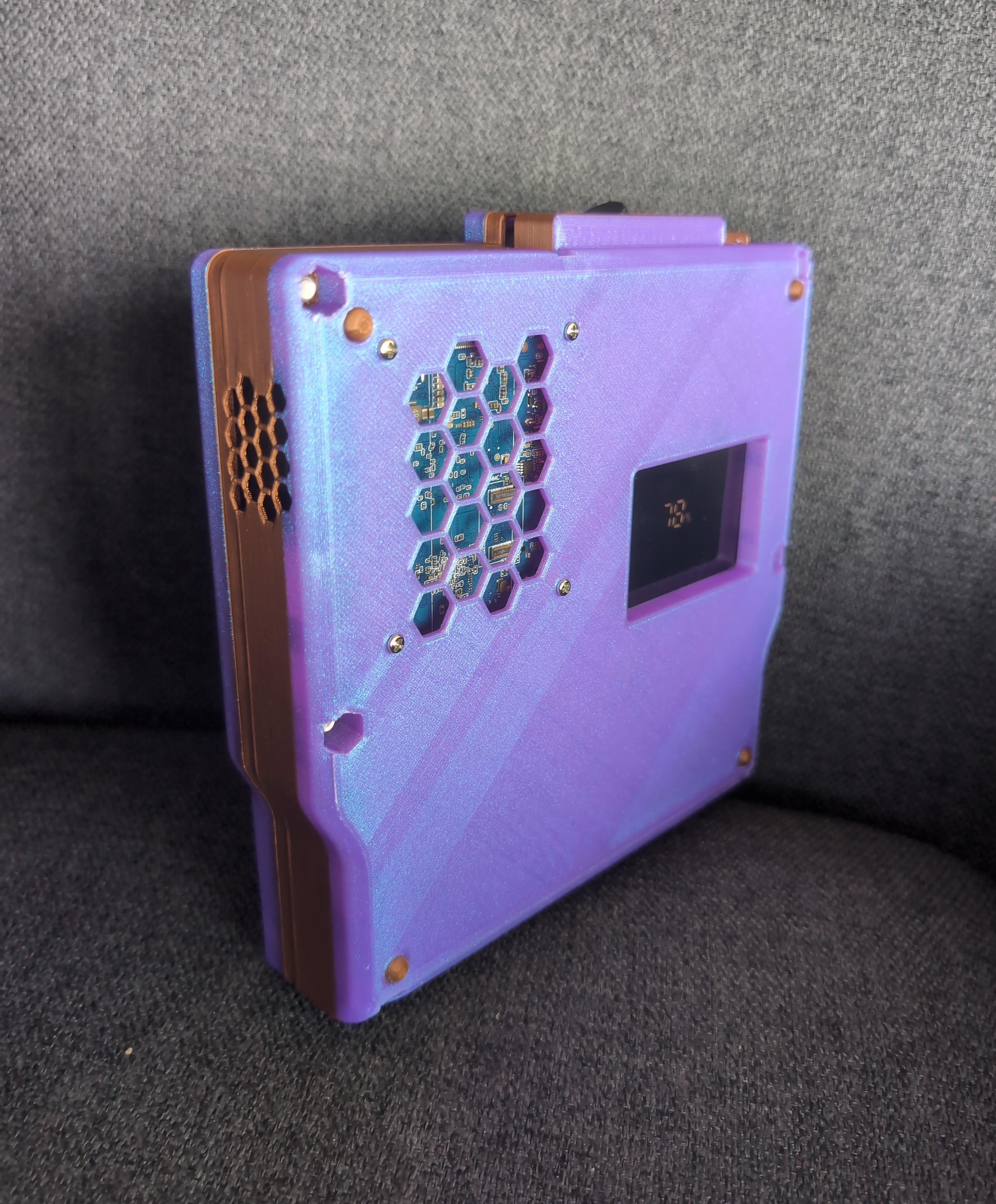
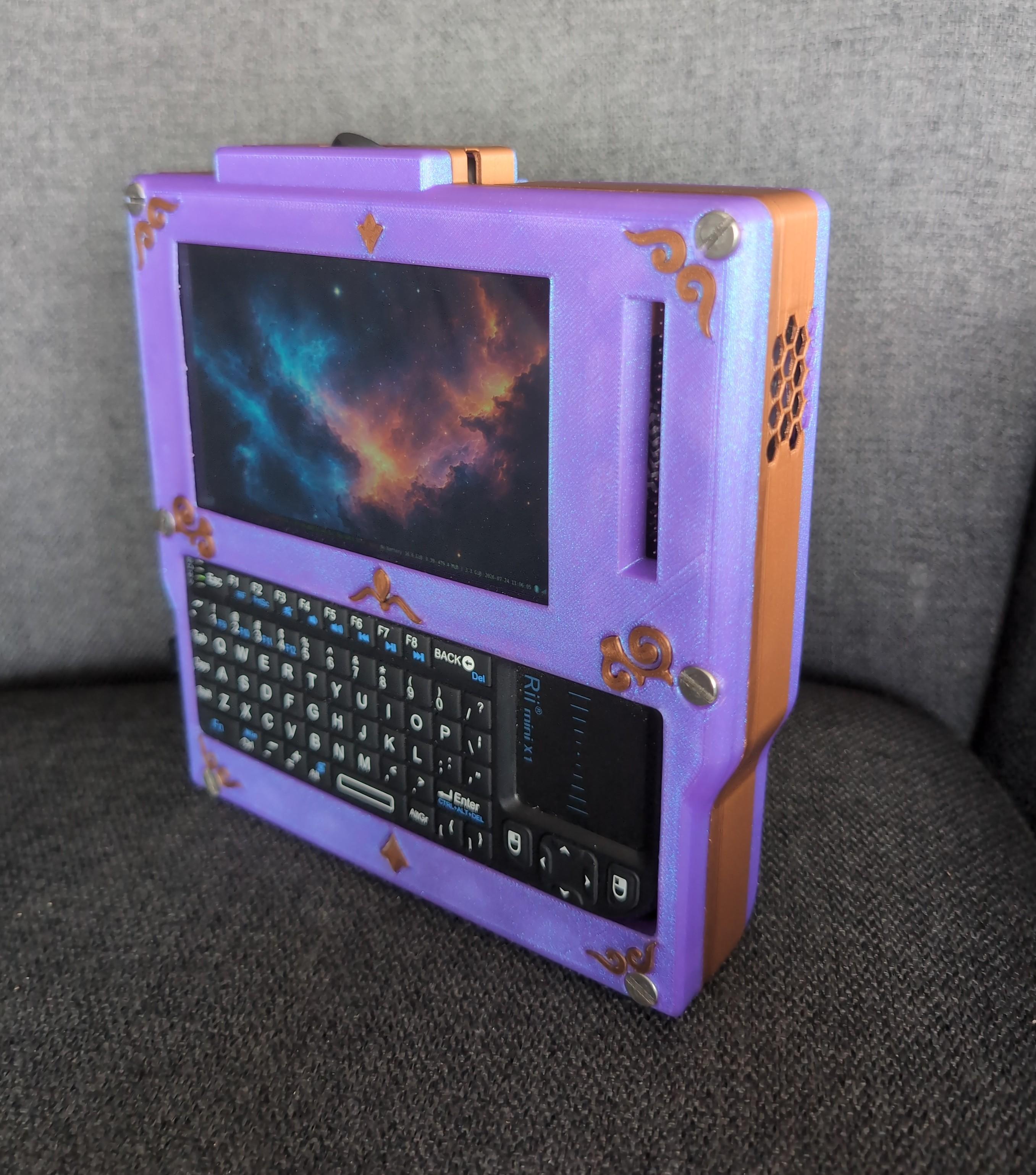
The build is an Orange Pi 4 Pro with an 5 inch hdmi screen, and a wireless USB keyboard/touchpad combo, and an off the shelf powerbank. It has a USB-C charging port, a USB-A port for accessories, a simple power switch at the top, hexagonal grids and a mini fan for ventilation, and leaves the header pins on the OrangePi exposed so I can use it for prototyping and hardware development projects. The case is printed in three parts and held together with M5 machine screws.
The biggest challenge and one of the unexpected costs was cable management within the extremely tight confines of making it handheld. Shoutout to Ubeboobey for the tip to grab a ribbon cable for the HDMI connection. I have easily spent over 100 euros across the whole project on different tiny usb and other cables and bits as I experimented with getting the best possible fit.
I initially wanted to follow the examples of the other women inspiring me and make the case out of something I already had or found in a thrift store but when a few weeks went by without finding anything perfect enough, I decided to just roll with 3d printing something and making sure I designed it to be aesthetically pleasing enough for me to be happy with it.
This build took months of over a dozen test prints with different mistakes in measurements, configuration, and just working out the physical practicalities. The result is just under 178x170x40 mm, which only just fits within the bed of my A1 mini. The print is in a galaxy or nebula glitter purple filament and a metallic copper filament, both PLA, with the embellishments and back feet being done in the same copper as the middle and then glued in place.
The OrangePi 4 Pro was a choice based on budget and availability and it is capable of handling basic computing tasks I throw at it fairly easily, but doesn't seem to have the power to run a PSX emulator which would probably be the toughest task I would want to throw at it, which surprised me but it's not the end of the world. I think it's also a little silly that I'm using the oPi 4 Pro which has it's dedicated NPU which I am completely failing to utilize at all.
All in all I'm very proud of this build just for the sense of making something that works and looks nice. It's not more useful than my phone or laptop but the point is making the thing for its own sake and the making was a lot of fun and now I have a cool thing that I can use as a spare portable low-power computing option.